5 Cars With The Most Useless (But Cool) Factory Features Ever
Cars have done a lot of evolving over the decades, going from an engine and four (or three) wheels to sophisticated, high-tech devices. Automakers are constantly looking for the next performance or comfort upgrade to give their products a competitive edge in the market.
Sometimes companies introduce features that eventually become commonplace, like the speedometer or the climate control system. Other times, the ideas miss the mark. In this list, we take a closer look at five automotive features that have shown up in cars over the course of auto history, but did not catch on.
However, these innovations were much cooler on paper than they turned out to be in real life. From sci-fi-esque infotainment controls to moving headlights, here are some of the most bizarre and useless automotive features in history.
Swiveling Third Headlight
Tucker 48
Modern cars are equipped with all sorts of features to improve visibility and make night driving safer. Headlight design has improved considerably over the decades. For example, LED technology, which was first used in daytime running lights just over two decades ago in the Audi R8, has now become commonplace. Automatic systems that switch between high beams and low beams to avoid dazzling other drivers have also become ubiquitous.
In the late 1940s, however, things were very different. Modern automotive technology was still a long way away, but Preston Tucker, a controversial automotive entrepreneur, wanted to bring the future a little closer. He designed an innovative model called the Tucker 48 (sometimes referred to as the Tucker Torpedo). This car had a feature on board which had been invented a few decades earlier, but never made it to the mainstream car market: a third headlight, located right in the middle of the machine’s front end.

How The Tucker Torpedo Influenced The Automotive Industry Decades After Its Demise
This forgotten hero never made it to large-scale production but left a very important legacy behind.
This headlight was not just fixed in place for additional visibility. The lamp swiveled as the driver turned the steering wheel to shine additional light in the car’s path. There was also a legal hurdle to overcome when the Tucker 48 was introduced to the public, because cars with more than two headlights were illegal in 17 states. Tucker was forced to come up with a headlight cover for customers in those areas. The 48 never made it to mass production, making the whole exercise somewhat pointless.
G-Force Meter
BMW i4, Subaru BRZ, And Several Other Models
Today’s sports cars, or even models that have just a sprinkle of sporty character, are frequently equipped with features aimed at the driver who wants to enjoy the occasional track day. From dedicated driving modes to lap-time counters, there is no shortage of gizmos out there for people who want to feel like a racing driver for a moment. In some cases, however, the features in question are simply not that useful.
One gadget that most of us could do without is a G-force meter, especially if it’s taking up space on the instrument cluster that could be used for something else. While the idea of measuring G-forces sounds cool on paper, it’s unlikely ever to be actually useful. Even with the most enthusiastic driver behind the wheel, taking a corner in an ordinary sports car is unlikely to induce G-LOC (loss of consciousness due to high Gs). It’s probably best to leave this gauge to the professional racing drivers and fighter pilots.
Gesture Control
BMW 7 Series
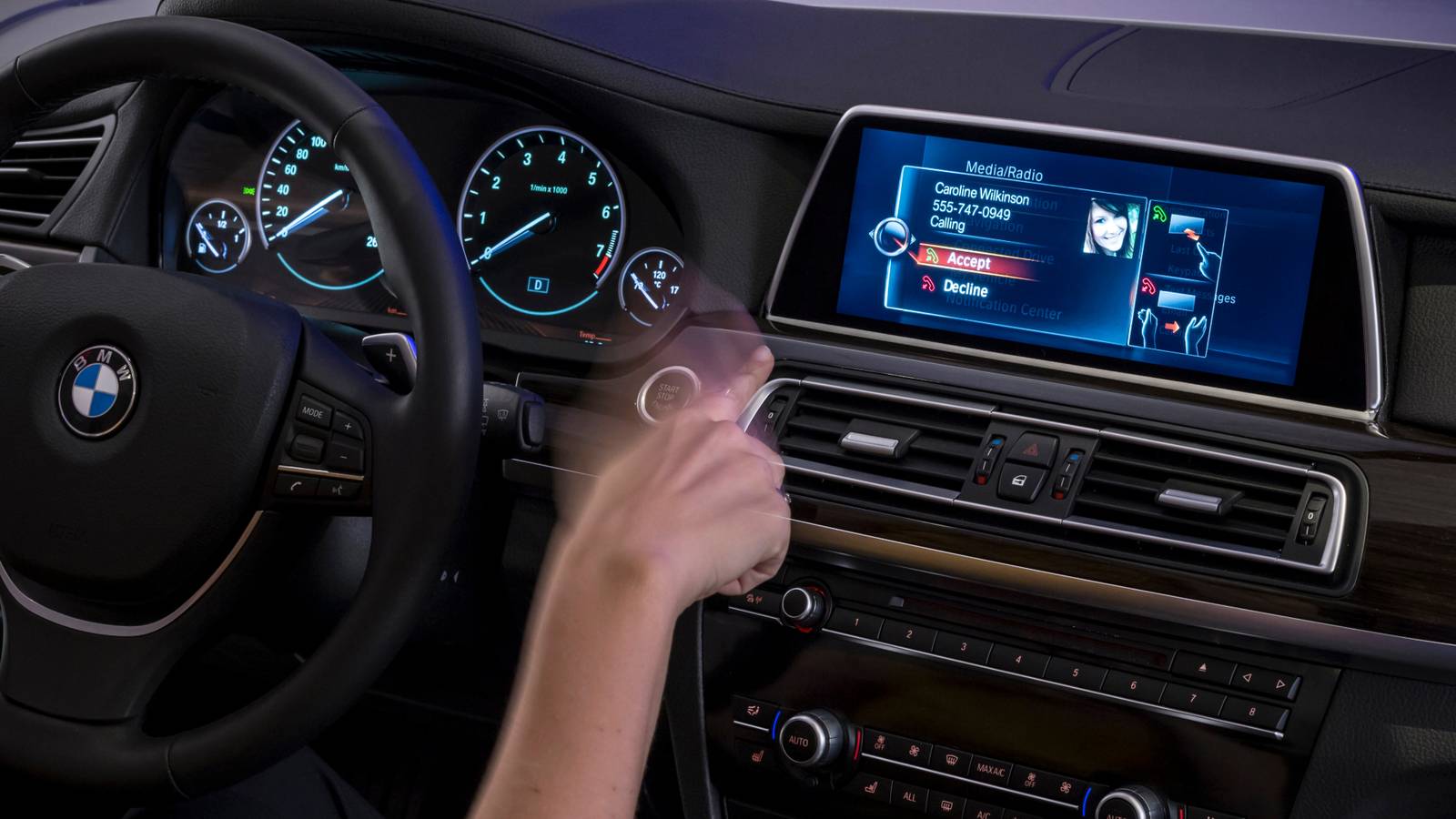
Next, we have a feature that looks like something out of a sci-fi movie, but doesn’t actually make the driving experience much easier or smoother. Gesture Control is a way to operate an infotainment system, which involves using gestures (such as a flick of the wrist or a swiping motion) rather than touching physical screens or buttons.
This feature is most notably associated with BMW. After a period of testing, which included using the technology on automotive production lines, the German automaker implemented Gesture Control on the 7 Series in 2017. The tech was later available on other models, such as the iX.

BMW’s Silliest Party Trick Was Born In A Bumper Factory
It’s Now Been Replaced By Ai.
However, Gesture Control did not quite pan out the way BMW had hoped. It was less intuitive than the company had originally envisioned, had a high potential for accidentally registering input, and, most importantly, required the driver to take their hands off the steering wheel repeatedly.
In a world where voice assistants are getting more and more sophisticated, and automakers are sometimes even pivoting back towards old-fashioned buttons and knobs, the Gesture Control feature simply did not catch on with the public. It may have looked cool, but this implementation had too many flaws to be viable.
Night Vision
Cadillac DeVille
Improving visibility in low-light conditions has been a goal for automakers for a very long time. At the start of the new millennium, Cadillac implemented a feature intended to solve this problem at least partially. The eighth and last generation of the Cadillac DeVille made its debut in 2000, with an available “Night Vision” feature on board. Cadillac had been assisted in developing this system by the aerospace and defense company Raytheon.
The device relied on a passive infrared sensor camera, located just behind the car’s grille. The system’s view was projected on the head-up display. Warmer objects were depicted in lighter colors, while cooler ones were in darker shades of gray. The Night Vision feature was available throughout most of the eighth-gen DeVille’s lifespan and left the market in 2004, while the DeVille lasted one further year.

The First Car With Night Vision Was Not The Mercedes-Benz S-Class
The last generation of the Cadillac DeVille pioneered a very important technological advancement.
Cadillac was not the only automaker to implement night vision technology. In 2005, Mercedes-Benz added a system to the S-Class that used the instrument cluster to show the video feed, rather than a head-up display. This layout was the case for most night vision systems, as automakers moved away from using the HUD for this purpose.
There are two main types of automotive night vision systems: active and passive. The former uses a built-in infrared light source, providing a high-quality image but lower functionality in wet or foggy weather conditions. The latter, seen in the Cadillac DeVille, uses a thermal imaging camera, which means the video feed has a lower resolution and the system struggles to work as well in hot weather. Although night vision technology is still used in some models today, its concrete benefits are limited, especially as ADAS features have gotten more sophisticated and more cars are equipped with things like pedestrian detection and automatic braking.
Air Balance Cabin Fragrance
Mercedes-Benz EQS
Last, there’s a feature that you can only consider useful if you’re the kind of person who is obsessed with perfumes and fragrances. Creating a comfortable environment for a vehicle’s occupants is a priority for high-end automakers, and Mercedes-Benz is no exception. The EQS, launched for the 2022 model year, is equipped with a host of fancy comfort features, including one that Mercedes calls “Air Balance”, which diffuses fragrance into the vehicle to make the cabin more pleasant and relaxing.
Mercedes, however, did not stop at creating a fragrance-diffusing gadget. The company also came up with its own custom scent to go with it. The smell in question is called No. 6 MOOD Linen, and according to the company, it creates a “slight impression of a fig tree standing at a high elevation and surrounded by fresh, cool air.”
The EQS is also available with the Energizer Air Control optional package, which adds a large HEPA filter and interior filters that reduce odors, sulfur dioxide, and nitrogen oxides. The system reacts to air quality outside the car, and is even capable of purifying air in the cabin before you step into the vehicle. While we can see this option being useful, especially for allergy sufferers, the fragrance diffuser may just be a little too frivolous for our liking; plus, we all know the new car smell is nicer anyway.
Sources: Mercedes-Benz, Cadillac, BMW, Subaru
link