Blockchain Technology Protection: Border Security & Trade: Part I

ABSTRACT
From its creation by Satoshi Nakamoto in 2008, blockchain technology has demonstrated its utility across many disciplines, industries, and even shown applications within government operations.
This study explores blockchain technology’s potential use in tracking the movement of goods and people, maintaining secure records and communications, and intelligence sharing. By analyzing the current Mexico-United States border environment and applying blockchain’s features, we intend to show the possibility of improved security measures, streamlined trade, and boosted economic growth. Recommendations are interspersed throughout the paper that could positively impact border security and cross-border trade using blockchain technology.
INTRODUCTION
Blockchain technology, introduced by Satoshi Nakamoto in 2008, has become a game-changer across various industries. Initially designed to power Bitcoin, blockchain technology’s decentralized and immutable nature has led to innovations and uses much beyond digital currency. Blockchain’s core concept involves a secure and transparent ledger system, eliminating the need for transactional intermediaries. Tripathi, Ahad, and Casalino define blockchain technology as follows. “Blockchain presents time-stamped and immutable blocks of data that are not owned by any single entity but rather managed by a group of nodes or computers where each block is secured and linked using cryptographic principles”.1 The technology’s ability to create tamper-proof records and verify identities are two features that have attracted the attention of governments and businesses across the globe.
This study explores blockchain technology’s potential use in tracking the movement of goods and people, maintaining secure records and communications, and intelligence sharing. By analyzing the current Mexico-United States border environment and applying blockchain’s features, we intend to show the possibility of improved security measures, streamlined trade, and boosted economic growth. Recommendations are interspersed throughout the paper that could positively impact border security and cross-border trade using blockchain technology.
BLOCKCHAIN TECHNOLOGY
Characteristics
In the 2008 white paper titled “Bitcoin: A Peer-to-Peer Electronic Cash System,” blockchain technology was introduced. The Bitcoin system was launched in January 2009. While Nakamoto presented the specific implementation of blockchain that powers Bitcoin, the basic ideas that underpin blockchain technology are cryptographic hashes, time-stamped immutable records, and decentralized consensus mechanisms. These characteristics have their roots in earlier academic and cryptographic research.2
While many associate blockchain solely with cryptocurrencies, its potential extends beyond financial transactions. “Blockchain is a distributed ledger technology that allows data to be stored across a network of computers in a secure, transparent, and immutable way (Nakamoto, 2008).
The name “blockchain technology” is derived from the blocks that store multiple transactions. Once a block is full of transactions, a new block is created and linked to the previous one, forming a chain of blocks, hence the blockchain name.3 Since the launching of Bitcoin, the technology has evolved and been adapted to applications beyond cryptocurrencies. The technology’s uses now range from administration to supply chain management to banking to voting systems, just to name a few.4
Blockchain should not be viewed as a brand-new technology, but rather as an innovative application of technology that continues to evolve. Its main purpose is to establish a secure and immutable ledger for managing digital assets. This is achieved by distributing data about asset ownership and transfers across multiple computers and participants, making it highly resistant to tampering. Because the ledger is decentralized and does not rely on a central authority, the system uses cryptographic methods to verify transactions. Each new set of data, or block, is cryptographically linked to previous blocks, creating a chain that cannot be altered without consensus from the network.5
The four diverse characteristics of blockchain: decentralized, immutable, transparent, and secure, make it a reliable and adaptable system. Blockchain operates on a network of computers called nodes, in which each node has a specific copy of the entire blockchain. No single entity controls the network. This gives it a decentralized nature. It is immutable because it is almost impossible to change once a block containing multiple transactions is added to the blockchain.6 If someone tries to alter a block, it would be rejected by other nodes within the network. It is transparent because all the transaction information is visible to anyone accessing the blockchain. However, transaction information on a blockchain can be encrypted to protect privacy and sensitive data, ensuring that only authorized parties have access to the details, while maintaining transparency at a higher level.7 Finally, it is secure because the transactions require network verification and are added to a specific block. This feature, called proof-of-work (POW) or proof-of-stake (POS), is configured by consensus-encrypted algorithms.8
In 2022, Guo and Yu9 asserted that in a trustless environment, blockchain provides users with nine desirable features. These are: decentralization, autonomy, integrity, immutability, verification, fault tolerance, anonymity, auditability, and transparency. The security attributes of blockchain technology offer a robust framework for maintaining data integrity and trust in a trustless environment. Table 1 outlines eight key elements contributing to the security of blockchain networks.

Table 1 – Security Measures in Blockchain Technology
| Security Measure | Description |
| Distributed Ledger Technology (DLT) | Data is stored on a distributed ledger across a network of computers, preventing central control and enhancing security. |
| Immutability | Due to cryptographic techniques, once data is recorded, it cannot be deleted or modified, ensuring that historical records remain tamper-proof. |
| Consensus Mechanisms | Blockchain networks use consensus protocols, requiring participants to agree on transaction validity. This ensures that only legitimate transactions are added to the blockchain. Different consensus mechanisms, like Proof of Work (PoW), Proof of Stake (PoS), and Delegated Proof of Stake (DPoS), ensure network participants agree on the blockchain’s state, preventing fraudulent transactions. |
| Zero-Knowledge Proofs | Certain blockchains use zero-knowledge proofs to enhance privacy while proving knowledge of a secret without revealing it. |
| Public Key Cryptography | Public key cryptography verifies user identity for digital signatures, ensuring only authorized individuals access and update their data. |
| Hash Functions | Cryptographic hash functions verify data integrity within blocks and across the blockchain, making data alteration virtually impossible. |
| Network Decentralization | Blockchain’s decentralized nature means no single point of failure, enhancing security. |
| Transparency | Blockchain provides transparency, allowing participants to verify transactions and the ledger’s current state, discouraging dishonest behavior. |
Source: Adapted from “A Survey on Blockchain Technology and Its Security” by Huaqun Guo and Xingjie Yu, Blockchain: Research and Applications, Volume 3, Issue 2, June 2022, Article 100067. Retrieved from https://doi.org/10.1016/j.bcra.2022.100067.
The combination of these eight security elements creates a solid and tamper-resistant environment. The ongoing adoption of blockchain technology across different sectors is driven by its capacity to maintain the integrity, genuineness, and dependability of data, posing significant obstacles for potential attackers aiming to undermine the security of such networks.10
How Can Blockchain Be Used?
Due to its unique and secure properties, blockchain technology can be used in various industries and applications. Table 2 shows nine current examples where blockchain technology is now being used.
Table 2 – Applications of Blockchain Technology in Various Sectors
| Sector | Description |
| Cryptocurrencies: | Enabling secure and decentralized digital transactions, exemplified by Bitcoin and Ethereum. |
| Supply Chain Management: | Ensuring transparency and authenticity in tracking the journey of goods, reducing fraud, and optimizing logistics. |
| Healthcare: | Safeguarding patient data integrity and privacy while facilitating secure sharing among authorized parties. |
| Intellectual Property and Copyright: | Timestamping and verifying ownership of digital assets, combating intellectual property theft and infringement. |
| Real Estate: | Streamlining property transactions with transparent and immutable ownership records. |
| Cross-border and Remittances: | Facilitating faster, cheaper, and more secure cross-border transactions than traditional banking channels. |
| Legal and Notary Services: | Enhancing the authenticity and traceability of legal documents and agreements. |
| Voting Systems: | Ensuring the integrity and transparency of elections by providing a secure and immutable record of votes, mitigating fraud, and enhancing trust in the electoral process. |
| Food Safety: | Ensuring transparency and traceability in the food supply chain, enhancing consumer trust and safety. |
Al-Jaroodi, J., & Mohamed, N. (2019). Blockchain in Industries: A Survey. IEEE Access, 7, 36500-36515. Information for Table 2 is derived from this article.
What Are the Risks and Limitations of Blockchain?
Blockchain technology, though transformative, is not without its challenges. Key among these are scalability limitations due to energy-intensive mining processes, regulatory uncertainties, and legal compliance complexities. And despite the technology’s inherently secure nature, there can be security risks. These factors underscore the importance of addressing such issues to fully unlock blockchain’s potential across diverse industries. Here are descriptions of the issues:
Scalability Issues: Blockchain networks often face challenges related to scalability, especially in public blockchains. As the number of transactions increases, the network can become slow and inefficient, leading to delays and higher transaction costs. This can limit blockchain’s widespread adoption for applications requiring high transaction throughput (Marr, 2023; De Meijer, 2023). The obvious lesson for organizations that choose to use blockchain technology is that the size and scalability of the network have to be considered in planning.
Energy Consumption: Some consensus algorithms used in blockchain networks, such as PoW require substantial computational power leading to high energy consumption. This energy-intensive process has raised concerns about the environmental impact of blockchain technology, especially as the popularity of cryptocurrencies continues to grow. This impact primarily stems from the substantial energy consumption involved in the mining process. Mining entails the resolution of intricate mathematical algorithms to authenticate transactions and generate new blocks on the blockchain. According to the Cambridge Centre for Alternative Finance (CCAF), Bitcoin consumes approximately 110 terawatt-hours of electricity annually, a level comparable to the total energy consumption of smaller nations such as Malaysia or Sweden.11 This considerable energy usage contributes to blockchain technology’s carbon footprint, posing a potential challenge for global climate change initiatives.
Efforts are underway to address this issue, with various initiatives to render the technology more environmentally sustainable. One proposed approach involves leveraging renewable energy sources such as solar, wind, or hydropower to power mining operations. By embracing these alternative energy sources, the carbon footprint associated with blockchain technology might be significantly diminished.12 Such initiatives are underway, but as of yet are not viable options.
Regulatory Challenges: Blockchain technology’s decentralized and pseudonymous nature poses challenges for regulatory authorities. The very nature of the technology can make it difficult to monitor and control illicit activities. While the blockchain is useful in legitimate operations, it can also be used for money laundering, to finance illegal activities, and other illegal transactions. This has led to regulatory uncertainty in many jurisdictions, potentially hindering the broader adoption of blockchain. Regulators face a daunting task in identifying and striking a balance between enabling innovation while maintaining financial stability and investor protection. For tax authorities, the first-order task is ultimately more mundane, if not more straightforward, and no less critical to encompass developments in the use of crypto assets into a well-functioning tax system.13
Legal and Compliance Issues: Blockchain applications may face legal challenges regarding data privacy and compliance with existing regulations. Ensuring compliance with data protection laws, such as the European Union’s General Data Protection Regulation (GDPR), can be complex, especially when dealing with immutable data stored on a blockchain.14 Blockchain technology has transcended its initial association with cryptocurrencies, proving to be a secure and transparent decentralized ledger system. While its decentralized nature and cryptographic verification ensure data integrity and reliability for other industries, ensuring compliance to government regulations remains a concern.
Security Concerns: In blockchain systems utilizing proof of work (PoW) consensus mechanisms, the significant security concern of a 51% attack looms. This threat arises when a single entity controls over half of the network’s computational power. Such dominance allows the malicious actor to manipulate transactions and potentially undermine the trust and integrity of the entire system. This exposes a centralization vulnerability inherent in PoW blockchains, underscoring the importance of diverse and distributed participation to maintain a robust security posture.15
Despite its potential, blockchain technology faces the five challenges shown above. Addressing these hurdles is essential to fully realize blockchain technology’s transformative capabilities across various sectors. Nevertheless, ongoing developments spearheaded by blockchain developers, researchers, regulatory bodies, and industry stakeholders are working to address these limitations, fostering the technology’s evolution and broader adoption across diverse sectors.
BLOCKCHAIN TECHNOLOGY APPLICATIONS ALONG THE MEXICAN AND THE UNITED STATES BORDER
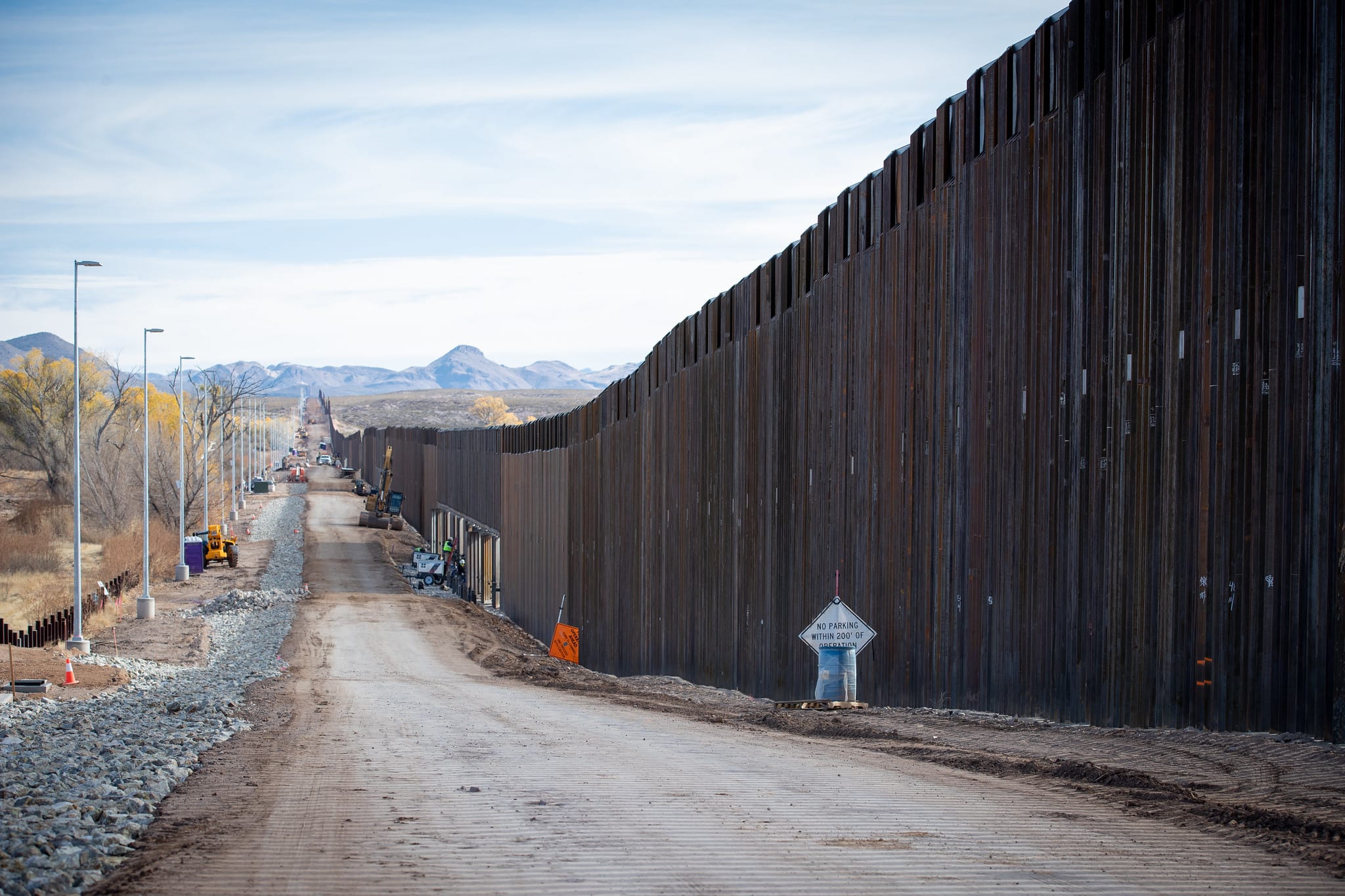
For decades, the circumstances surrounding the Mexico-United States border have garnered significant attention from both the public and policymakers. The economy, trade, public health, public safety, and national security are directly influenced by developments along this international boundary. The border extends for approximately 2,000 miles, of which 1,254 are land miles, while the remaining 700 miles follow the Rio Grande River. The region is characterized by diverse terrain, ranging from major urban centers to deserts and mountains, each presenting distinct challenges. A complicating factor is that the majority of Texas lands along the border are privately owned. More recently, new dynamics such as the Roosevelt Strip16 have further shaped the discourse and policies related to border management. Additional considerations include the proximity of the Gulf of Mexico and the Pacific Ocean, which continues to play a strategic role in the region.17 To address the issues along the border, the two nations have collaborated on bilateral treaties and agreements18 to address shared security concerns.
The issue of illegal immigration has been a prominent debate centered on the several issues found along the southern border that have led to discussions about comprehensive immigration reform and policies related to border enforcement. Over the years, presidential administrations of both nations have proposed different strategies, including enhanced border technology, surveillance, better enforcement of immigration laws, and measures to address the root causes of migration from third-party countries. Mexico and the U.S. have implemented various measures to enhance border security, including constructing physical barriers, deploying surveillance and monitoring technologies, and the presence of border patrol agents. Both nations have employed their national guard forces. Since January 2025, both nations have in fact deployed federal elements to increase border law enforcement. These deployments and the Trump Administration’s stricter enforcement of law has greatly reduced illegal activities on the border.
Better collaboration between Mexico and the United States is now more critical than ever to mitigate both countries’ challenges. There is a recognition that new technological tools are needed to bolster border security. This acknowledgment is vital to increase the safety of cross-border trade. Innovative technologies such as blockchain and artificial intelligence hold promise in addressing the risks and challenges currently encountered at the border.19 Blockchain technology offers promising tools for the United States and Mexico as they work to find solutions to the multifaceted challenges along their common border. The authors believe the benefits offered by blockchain technology could have a transformative influence in tackling pressing issues and fostering greater cooperation between the two nations.
At the Mexico-U.S. border, humanitarian aid, free trade, and diplomacy converge and impact the region’s social, economic, and political landscape. Despite persistent challenges such as violence, poverty, and population displacement, these pillars are essential in addressing immediate needs and fostering long-term collaboration. Humanitarian aid provides critical support to vulnerable populations, particularly migrants facing harsh conditions and exploitation. Some free trade agreements, like the United States-Mexico-Canada Agreement (USMCA), have been instrumental in driving economic growth by streamlining cross-border trade, reducing tariffs, and encouraging investment, thereby boosting industries on both sides of the border. Diplomacy too plays a crucial role in navigating the complexities of border policies, managing trade dynamics, and ensuring security cooperation between the two nations. These efforts collectively work to stabilize the region and promote mutual prosperity.
However, while these traditional solutions have made significant strides, emerging technologies, particularly blockchain technology, offer a new frontier of innovation. Blockchain has the potential to revolutionize border security, supply chain management, and the tracking of legal and illegal activities, providing enhanced transparency, efficiency, and security. These could fundamentally alter the approach to these longstanding challenges. Areas where the technology could be applied include security operations, counter-drug, weapons, and human trafficking, as well as addressing asylum seekers, illegal imports, and supply chain issues. By providing a secure and transparent ledger system, blockchain can enhance border security by streamlining the tracking of goods and people, management of records, and improving international cooperation.
Tracking Goods and People
Blockchain technology’s immutable and transparent ledger system can enhance border security by: 1) securely storing and verifying identities; 2) streamlining the immigration process; and
3) reducing identity fraud.
Smart contracts on a blockchain could facilitate secure and automated processes for visa applications, asylum requests, and legal immigration by reducing bureaucratic inefficiencies. Moreover, blockchain’s decentralized nature can enhance cross-border trade’s traceability and transparency. This could reduce smuggling and the trafficking of counterfeit goods. The technology could also aid in tracking the movement of legal goods, providing a transparent record of supply chain transactions. Potentially, such action could minimize the trafficking of illegal drugs. Additionally, blockchain-based solutions can contribute to secure data sharing between relevant agencies while respecting the privacy concerns of individuals.20
Blockchain technology ensures data integrity by storing immutable and tamper-proof information. Such characteristics are crucial for maintaining accurate records in border control operations. The technology’s identity management capabilities create secure digital identities, enabling reliable verification and reducing the risk of identity fraud during border crossings. The decentralized nature of blockchains allows for international collaboration, facilitating secure information sharing among different nations’ border control agencies. Additionally, blockchain can ensure secure communications through encrypted and tamper-resistant channels, enhancing the confidentiality and reliability of information exchanges critical for adequate border security.21
Here are five specific areas where blockchain could improve operations.
Drug Trafficking:
Traceability: Blockchain can enable the traceability of pharmaceuticals and other regulated goods, making it easier to track the movement of drugs across the border and identify illicit supply chains.
Supply Chain Transparency: By recording the entire supply chain of pharmaceuticals and other goods on a blockchain, law enforcement agencies can identify points of vulnerability where drugs are diverted into illegal channels.
Human Trafficking:
Identity Verification: Blockchain-based identity solutions can help verify the identities of individuals crossing the border, making it more difficult for human traffickers to operate anonymously.
Supply Chain Monitoring: Employing blockchain to track the recruitment and movement of workers across borders can help identify patterns indicative of human trafficking and enable authorities to intervene.
Supply Chain Issues:
Real-Time Tracking: Blockchain-based supply chain platforms can provide real-time visibility into the movement of goods across the border, helping businesses anticipate and mitigate disruptions.
Smart Contracts for Compliance: Smart contracts can automate compliance checks, ensuring that goods meet regulatory requirements before crossing the border and reducing delays and bottlenecks.
Smart Contracts for Compliance: Blockchain-based smart contracts22 can automate compliance with border security regulations and protocols. These self-executing contracts can ensure that all parties involved adhere to predefined rules and conditions, thereby reducing the likelihood of human error or intentional non-compliance. Smart contract security has potential for improved approaches, including implementing formal verification, security tools based on artificial intelligence23, and insurance specific to smart contracts. Establishing regulatory frameworks and compliance protocols is a fundamental basis for ensuring the secure execution of smart contracts. Real-time threat identification and prompt mitigation are facilitated through ongoing monitoring and responsive strategies.24 By leveraging blockchain technology, border security agencies can create a more robust and reliable system for managing and securing operations. This can improve efficiency, transparency, and trust in border security measures and enhance information sharing between Mexican and American agencies.
Interoperability and Standards: Interoperability refers to the ability of different systems, devices, or applications to connect and communicate in a coordinated manner to exchange and interpret data or perform tasks effectively. This applies directly to the Internet of Things. Establishing interoperability standards, such as decentralized identifiers (DIDs) and verifiable credentials, is essential for different blockchain-based identity systems to operate seamlessly. This allows for wider adoption and usability across various platforms and services.25 International Organization for Standardization (ISO) standards can significantly enhance blockchain-based identity management systems by providing guidelines and frameworks that promote interoperability, security, and trust. Standards such as ISO/IEC 27001, ISO/IEC 29115, ISO/IEC 19944, and ISO/IEC 29100 offer valuable insights into establishing secure and reliable identity management systems on blockchain platforms. For instance, ISO/IEC 27001 sets out requirements for information security management systems, ensuring that blockchain-based identity solutions implement robust security controls to safeguard sensitive identity data.26 ISO/IEC 29115 specifies criteria for establishing trusted identity systems, which are crucial for building user trust and confidence in blockchain-based identity platforms. Additionally, ISO/IEC 19944 provides guidelines for implementing interoperable identity solutions, enabling seamless integration between blockchain networks and identity management systems.27
Maintaining Secure Records and Communications
Immutable Record-keeping: Blockchain’s immutable nature ensures that once data is recorded, it cannot be altered retroactively without the network’s consensus. This feature helps maintain the integrity of critical border security data, such as visa and passport information, border crossing records, and other sensitive data, reducing the risk of data manipulation or tampering. Blockchain’s potential to facilitate customs processes is multifaceted, from customs clearance to interagency cooperation, certification, identity management, compliance management, revenue collection, and post-clearance audit. Through this technology, the exact copy of a ledger is instantly available to all parties at different nodes in the most updated, trusted, secure, and immutable manner, obviating the need to maintain separate ledgers by each party as per the current practice.28
Secure Identity Verification: Blockchain technology can be utilized to create a secure and decentralized system for identity verification. By storing identity data on a blockchain, border security officers can verify the identity of individuals and their travel documents in real time. This reduces the risk of identity fraud and can ensure authorized access. Identity management is crucial for minimizing fraud and advancements in this area, including using encrypted digital identities. The concept of self-sovereign identity29 is gaining traction, emphasizing individuals’ control over their data. Civic is at the forefront of streamlining secure authentication processes, ensuring the integrity of identity verification. Similarly, Sovrin30 is actively working on establishing an identity network that operates independently of governmental influence, ensuring greater privacy and security for users.31
Traceability and Transparency: Blockchain can track products and individuals across borders, ensuring movement transparency. A transparent and auditable record of all transactions and movements is produced. Utilizing blockchain can create a record of transactions for anything of value. It is increasingly used to prove the integrity of commodities, tracing their journey from the source to the end user.32
Asylum Seekers: Asylum seekers often face significant challenges in securely managing their personal information and legal claims, as documents may be lost, altered, or subject to manipulation during the asylum process. Blockchain technology offers a potential solution by providing a secure and tamper-proof platform for storing asylum seekers’ documentation, ensuring that their records remain intact and accessible throughout the process. In addition, blockchain can enhance transparency by creating a verifiable record of each step in asylum processing, thereby reducing the risk of errors or fraudulent alterations. Together, these features could strengthen trust in asylum systems and improve the protection of vulnerable individuals.33
Illegal Imports: Illegal imports pose significant risks to national security, public health, and economic stability, as counterfeit goods can enter markets undetected. Blockchain technology offers a robust solution by enabling product authentication, ensuring that goods crossing the border are genuine and meet regulatory standards. Additionally, smart contracts on a blockchain can automatically enforce customs regulations, guaranteeing that only compliant goods are allowed entry. This combination of authentication and automated compliance can strengthen border security and streamline trade while reducing fraud.34
In the next issue of HSToday, Part II of this article, Blockchain technology along the Mexican – U.S. Border will pick up with ‘Data Integrity.
(No artificial intelligence was used in writing this article.)
References
1 Gautami Tripathi, Mohd Abdul Ahad, Gabriella Casalino, A comprehensive review of blockchain technology: Underlying principles and historical background with future challenges, Decision Analytics Journal, Volume 9, 2023, 100344, ISSN 2772-6622, https://doi.org/10.1016/j.dajour.2023.100344. (https://www.sciencedirect.com/science/article/pii/S2772662223001844)
2 Uddin, 2021; Crypto.com, 2024.
3 Firica, 2017.
4 Tripathi, Ahad, & Casalino, 2023.
5 United States Government Accountability Office, 2022
6 Hayes, 2023.
7 Muriuki, 2024.
8 Nakamoto, 2008; IBM, n.d.
9 Guo and Yu, 2022.
10 IBM, n.d.; Venkatesan & Rahayu, 2024.
11Cambridge Centre for Alternative Finance. (2023). Cambridge Bitcoin Electricity Consumption Index (CBECI). University of Cambridge.
12 Hussein, Salama, & El-Rahman, 2023; (Clarke, 2023a; Alzoubi & Mishra, 2023.
13 Baer, de Mooij, Hebous, & Keen, 2023) (United States Government Accountability Office, 2022.
14 European Parliamentary Research Service, 2019; Akanfe, Lawong, & Rao, 2024).Proof of
15 Ajayi, 2023; Shardeum Content Team, 2023a.
16 The Roosevelt Strip refers to a stretch of land along the Texas border that is particularly affected by private ownership issues, complicating federal and state efforts to build infrastructure, enforce border security, and manage migration.
17 University of Arizona, 2020; Klein, 2018; Third Way, 2017.
18 “Mexico and the United States have shown significant alignment of interests on security issues. The reactive and shortsighted approach that characterized the U.S.- Mexican relationship until the mid-1990s has been left behind; policy unilateralism by both countries has declined and genuine cooperation efforts have developed, such as the High Level Contact Group for Drug Control (1996), the Security and Prosperity Partnership of North America (2002), the Mérida Initiative (2007), and more recently, the Bilateral Security Cooperation Group (2014).” (U.S.-Mexico Security Cooperation Taskforce, 2018).
19 U.S. Department of Homeland Security, 2024a.
20 Bublak, 2023; Khan et al., 2021).
21 Abraham, 2023; Artasanchez, 2023.
22 A smart contract is a self-executing digital contract with the terms of the agreement directly written into code, enabling automated and trustless transactions on blockchain networks.
23 Artificial intelligence (AI) is the development of computer systems capable of performing tasks that typically require human intelligence, such as learning from data, recognizing patterns, and making decisions.
24 Finck, 2019; Koulu, 2016; Digialert, 2023.
25 W3C, 2022; Hewett, van Gogh, & Pawczuk, 2020.
26 Cristian, 2023).
27 International Organization for Standardization, 2023.
28 World Trade Organization, n.d.; Tripathi, Ahad, & Casalino, 2023.
29 Self-sovereign identity on blockchain leverages decentralized control over personal information, cryptographic techniques, and tamper-resistant data storage to enhance security, privacy, and integrity in identity management.
30 Sovrin refers to the Sovrin Network, a decentralized system for self-sovereign identity management. It allows individuals to control their digital identities securely, independently of central authorities. This approach prioritizes privacy, security, and user empowerment by enabling selective disclosure of personal information in a verifiable manner.
31 New America, n.d.; Ottakath et al., 2023; Wentz, 2022.
32 Koh & Teo, 2022; Grigg, 2022; Moody’s, 2022; Bron, 2023.
33 United Nations High Commissioner for Refugees (UNHCR). (2022).
34 World Customs Organization (2023).
Abrahani, R. (2023, October 30). How is blockchain transforming the entire financial services industry? Datafloq. Retrieved from
Ajayi, A. (2023, September 22). Blockchain Security: Myth Or Reality? Retrieved from
Akanfe, O., Lawong, D., & Rao, H. R. (2024). Blockchain technology and privacy regulation: Reviewing frictions and synthesizing opportunities. International Journal of Information Management, 76, 102753.
Almaghrabi, A., & Alhogail, A. (2022). Blockchain-based donations traceability framework. Journal of King Saud University – Computer and Information Sciences, 34(10), 9442-9454.
Alzoubi, Y. I., & Mishra, A. (2023). Green blockchain – A move towards sustainability. Journal of Cleaner Production, 430, 139541.
Arvey, S., & Leutert, S. (2019, June 27). Thousands of asylum seekers are left waiting at the US-Mexico border. UC San Diego via The Conversation.
Artasanchez, A. (2023, June 11). The role of blockchain in data products: Ensuring transparency and trust. [LinkedIn article]. Retrieved from
Atlantic Council. (2022, September). The Economic Impact of a More Efficient US-Mexico Border: How Reducing Wait Times at Land Ports of Entry Would Promote Commerce, Resilience, and Job Creation. Report Contributors: Alejandro Brugués Rodríguez, John Byrd, Noé Arón Fuentes Flores, David Gaytan, John Gibson, Camila Hernández, Mayra Maldonado, Jason Marczak, Jorge Eduardo Mendoza Cota, Roberto Ransom, & Ignacia Ulloa. Retrieved from
Baer, K., de Mooij, R. A., Hebous, S., & Keen, M. (2023, July 5). Taxing Cryptocurrencies (No. WPIEA2023144). IMF Working Paper.
Bandopadhyay, D. (2023, October 7). Blockchain Security: Safeguarding Your Assets. LinkedIn.
Barney, N., Troy, S., & Pratt, M. K. (n.d.). TechTarget, distributed ledger technology (DLT). TechTarget. Retrieved from
Bron, D. (2023, May 9). The role of AI and Blockchain in the fight against human trafficking: Using technology to save lives and prevent exploitation. [LinkedIn article]. Retrieved from
Bublak, D. (2023, December 1). Smart contracts and blockchain: Revolutionizing contracting in the digital age. [Blog post]. Retrieved from
Chawre, H. (n.d.). Blockchain for Supply Chain: Paving the Way for Transparency and Efficiency. Retrieved from
Choudhary, A. S. (2023, May 30). Concept of cryptography in blockchain. [Blog post]. Retrieved from
Clarke, A. (2023, May 30a). The Environmental Impact of Blockchain Technology. Nasdaq. Retrieved from
Clarke, A. (2023, October 20b). Blockchain improves charity transparency — But is it right for everyone? Cointelegraph. Retrieved from
Cristian, L. (2023, September 28). The Growing Role of ISO 27001 in Blockchain: A Vital Requirement for Security. Retrieved from
Crypto.com. (2024, January 9). What Is Nakamoto Consensus? The Mechanism That Powers Bitcoin.
De Filippi, P., Mannan, M., & Reijers, W. (2020). Blockchain as a confidence machine: The problem of trust & challenges of governance. Technology in Society, 62, 101284.
De Meijer, C. R. W. (2023, September 26). Blockchain and the scalability challenge: Solving the blockchain trilemma. Finextra.
Digialert. (2023). Blockchain and smart contract security. LinkedIn. Retrieved from
Drug Enforcement Administration. (2021, March). DEA 2020 National Drug Threat Assessment (NDTA). Retrieved from
Ellison, C. B., Harwood, S., Kaye, D. M., & Ram, A. B. (2025, February 6). Bipartisan push to strengthen American supply chains. Global Supply Chain Law Blog.
European Parliamentary Research Service. (2019, July). Blockchain and the General Data Protection Regulation: Can distributed ledgers be squared with European data protection law? (STOA Panel for the Future of Science and Technology, Scientific Foresight Unit, PE 634.445).
Fairchild, Z. (2023, December 29). Quantum blockchain security: Navigating the new frontier of digital integrity. Medium.
FerdH. (2024, February). Is Blockchain Identity Management a game-changer in supply chain trust building? Bulbapp.
Finck, M. (2019). Smart contracts as a form of solely automated processing under the
GDPR. International Data Privacy Law, 9(2), 78–94.
Firica, Oana. “BLOCKCHAIN TECHNOLOGY: PROMISES AND REALITIES OF THE YEAR 2017.” Quality – Access to Success 2017, Supplement 3: 51-58.
Forbes Technology Council. (2024, February 16). Blockchain technology: Harnessing it for business and social good. [Blog post]. Forbes. Retrieved from
Ganne, E. (2018). Can Blockchain revolutionize international trade? [PDF document]. World Trade Organization. Retrieved from
Gatsby, T. (2024, February 20). Blockchain for humanitarian aid: Improving transparency and accountability. [LinkedIn article]. Retrieved from
Gaur, V., & Gaiha, A. (2020, May-June). Building a transparent supply chain. Harvard Business Review. Retrieved from
Gillis, A. S. (2022). Self-sovereign identity. Retrieved from
Grigg, G. (2022, April 12). Combatting trafficking with blockchain analysis. [Blog post]. Retrieved from
G’sell, F., & Martin-Bariteau, F. (2022.). The impact of blockchains for human rights, democracy, and the rule of law. Council of Europe. Retrieved from
Guo, H., & Yu, X. (2022, June). “A Survey on Blockchain Technology and Its Security.” Blockchain: Research and Applications, 3(2), Article 100067.
Hayes, A. (2023, December 15). Blockchain facts: What is it, How it Works, and How it Can Be Used? Investopedia.
Henry, W., Chen, E., Kathawate, R., & Coulter, J. (n.d.). Using blockchain to drive supply chain transparency: Use cases and future outlook on blockchain in supply chain management. Deloitte Consulting LLP. Retrieved from
Hewett, N., van Gogh, M., & Pawczuk, L. (2020). Inclusive deployment of blockchain for supply chains: Part 6 – A framework for blockchain interoperability. World Economic Forum. Retrieved from
Hussein, Z., Salama, M. A., & El-Rahman, S. A. (2023). Evolution of blockchain consensus algorithms: A review on the latest milestones of blockchain consensus algorithms. Cybersecurity, 6, 30.
IBM. (n.d.). “What is blockchain security?” IBM.
International Organization for Standardization (ISO). (2023). Blockchain and distributed ledger technologies (DLTs) — Overview of trust anchors for DLT-based identity management (ISO/TR 23644:ed-1:v1). Retrieved from
International Rescue Committee. (2022, July 1). Is it legal to cross the U.S. border to seek asylum? Retrieved from
Jung, T. J. (2019, April 15). How transparency through blockchain helps the cybersecurity community. IBM. Retrieved from
Khan, S. N., Loukil, F., Ghedira-Guegan, C., Benkhelifa, E., & Bani-Hani, A. (2021). Blockchain smart contracts: Applications, challenges, and future trends. Peer-to-Peer Networking and Applications, 14(5), 2901–2925.
Kharche, A., Badholia, S., & Upadhyay, R. K. (2024). Implementation of blockchain technology in integrated IoT networks for constructing scalable ITS systems in India. Blockchain: Research and Applications. Advance online publication.
Kiania, K., Jameii, S. M., & Rahmani, A. M. (2023). Blockchain-based privacy and security preserving in electronic health: A systematic review. Multimedia Tools and Applications, 82(28493–28519).
Klein, C. (2018, December 26). Everything you need to know about the Mexico-United States border. History.
Koulu, R. (2016). Blockchains and Online Dispute Resolution: Smart Contracts as an Alternative to Enforcement. Script-ed, 13(1). Retrieved from
Lemus, G. (2024, February 13). Arms Trafficking Across the US-Mexico Border. Wilson Center, Mexico Institute. Retrieved from
Marr, B. (2018, February 16). A very brief history of blockchain technology everyone should read. Forbes.
Marr, B. (2023, April 14). The 5 Biggest Problems With Blockchain Technology Everyone Must Know About. Forbes. Retrieved from
McDaniel, C. A. (2019). Can Blockchain Technology Facilitate International Trade? SSRN Electronic Journal. DOI:10.2139/ssrn.3377708.
Moody’s. (2022, November 29). Blockchain-based solutions to combat modern slavery. Retrieved from
Muriuki, W. (2024, February 15). Total Bitcoin, Balancing Privacy and Transparency in Blockchain. Retrieved from
Nakamoto, S. 2008. “Bitcoin: A Peer-to-Peer Electronic Cash System.” Accessed September 6, 2023.
New America. (n.d.). Blueprint for Blockchain and Social Innovation: Key Attributes of Blockchain. Retrieved from
Notomoro. (2024, February 29). Blockchain for supply chain: Enhance transparency & traceability. Retrieved from
NuvoCargo. (2024). How Blockchain Technology can Enhance Transparency and Security in US-MX Cross-Border Freight.
Office of the Director of National Intelligence, National Counterintelligence and Security Center. (2024, September 26). Securing your supply chain ecosystem.
Office of the United States Trade Representative. (n.d.). Mexico trade & investment summary. U.S. Trade Representative.
Okazaki, Y. (2018). Unveiling the Potential of Blockchain for Customs. World Customs Organization. Retrieved from
Ottakath, N., Al-Ali, A., Al-Maadeed, S., Elharrouss, O., & Mohamed, A. (2023). Enhanced computer vision applications with blockchain: A review of applications and opportunities. Journal of King Saud University – Computer and Information Sciences, 35(10), 101801.
Red Cross. (2024, January 03). Red Cross Support for Migrants, Refugees, and Asylum Seekers in the United States. Retrieved from
RecordRS. (2024, January 3). Using blockchain in medical record management. [Blog post]. Retrieved from
Shardeum Content Team. (2023a, May 10). What is a 51% Attack, and Its Impact on Blockchain? Shardeum.
Shardeum Content Team. (2023b, September 21). Self Sovereign Identity (SSI): The Future of Digital Identity. Retrieved from
Singh, R. (2024, March 1). The impact of blockchain on supply chain management. [Blog post]. Retrieved from
Stockburger, L., Kokosioulis, G., Mukkamala, A., Mukkamala, R. R., & Avital, M. (2021). Blockchain-enabled decentralized identity management: The case of self-sovereign identity in public transportation. Blockchain: Research and Applications, 2(2), 100014.
Stellar Development Foundation. (n.d.). Smart contract basics. Retrieved from
Synopsys. (n.d.). Blockchain.
Third Way. (2017, February 2). The state of the southern border [Memo]. Retrieved from
Tripathi, G., Ahad, M. A., & Casalino, G. (2023). A comprehensive review of blockchain technology: Underlying principles and historical background with future challenges. Decision Analytics Journal, 9, 100344.
Uddin, M. A., Stranieri, A., Gondal, I., & Balasubramanian, V. (2021). A survey on the adoption of blockchain in IoT: Challenges and solutions. Blockchain: Research and Applications, 2(2), 100006.
United Nations. (n.d.). Human Trafficking FAQs. Retrieved from
U.S. Customs and Border Protection. (2020, February 28). CBP Leverages Blockchain Innovation to Protect American Business. CBP Newsroom.
U.S. Customs and Border Protection. (n.d.). Human Trafficking. Retrieved from
U.S. Department of Justice, National Drug Intelligence Center. (2008, April). Attorney General’s Report to Congress on the Growth of Violent Street Gangs in Suburban Areas. Retrieved from
U.S. Department of Homeland Security. (2024a, July 2.). Blockchain portfolio. Retrieved from
U.S. Department of Homeland Security. (2024b, August 1). National Strategy for Global Supply Chain Security. Retrieved from
U.S. Department of Homeland Security. (n.d.) Office of Homeland Security Statistics. . Immigration Enforcement Actions Annual Flow Report. Retrieved from
U.S. Department of State, Bureau of Western Hemisphere Affairs. (2023, September 13). U.S. Relations With Mexico: Bilateral Relations Fact Sheet.
U.S. Department of State. (2025). Joint Statement on Security Cooperation between the United States and Mexico.
U.S. Government Accountability Office. (2021). Firearms Trafficking: U.S. Efforts to Disrupt Gun Smuggling into Mexico Would Benefit from Additional Data and Analysis (GAO-21-322). Published: February 22, 2021. Publicly Released: March 24, 2021. Retrieved from
U.S. Government Accountability Office. (2022). Technology Assessment: Blockchain: Emerging Technology Offers Benefits for Some Applications but Faces Challenges. Report to Congressional Requesters. Retrieved from
U.S. Government Accountability Office. (2023, September). SOUTHWEST BORDER: Additional Actions Needed to Address Cultural and Natural Resource Impacts from Barrier Construction. Report to the Ranking Member, Committee on Natural Resources, House of Representatives. Retrieved from
United Nations High Commissioner for Refugees. (2022). Global Report 2022.
University of Arizona. (2020, April 28). A Brief Legislative History of the Last 50 Years of the U.S.-Mexico Border. Retrieved from
UtilitiesOne. (2023, November 3). Blockchain Ensuring Data Integrity in Communication Networks. Retrieved from
Venkatesan, K., & Rahayu, S. B. (2024). Blockchain security enhancement: An approach towards hybrid consensus algorithms and machine learning techniques. Scientific Reports, 14, 1149.
W3C. (2022, July 19). Decentralized Identifiers (DIDs) v1.0: Core architecture, data model, and representations. Manu Sporny, Dave Longley, Markus Sabadello, Drummond Reed, Orie Steele, & Christopher Allen. W3C Recommendation. Retrieved from
Wentz, B. (2022, March 8). How blockchain and digital identity can reduce risk and identity theft. [Blog post]. Retrieved from
World Customs Organization (WCO). (2023). Open Customs Blockchain: The missing piece to unlocking the digitalization of customs.
World Trade Organization. (n.d.). World Customs Organization and World Trade Organization, Joint publication: The role of technologies in trade facilitation. Retrieved from
Zhang, X., Sheng, Y., & Liu, Z. (2024). Using expertise as an intermediary: Unleashing the power of blockchain technology to drive future sustainable management using hidden champions. Heliyon, 10(1), e23807.
Zwitter, A., & Boisse-Despiaux, M. (2018). Blockchain for humanitarian action and development aid. International Journal of Humanitarian Action, 3, 16.
link